
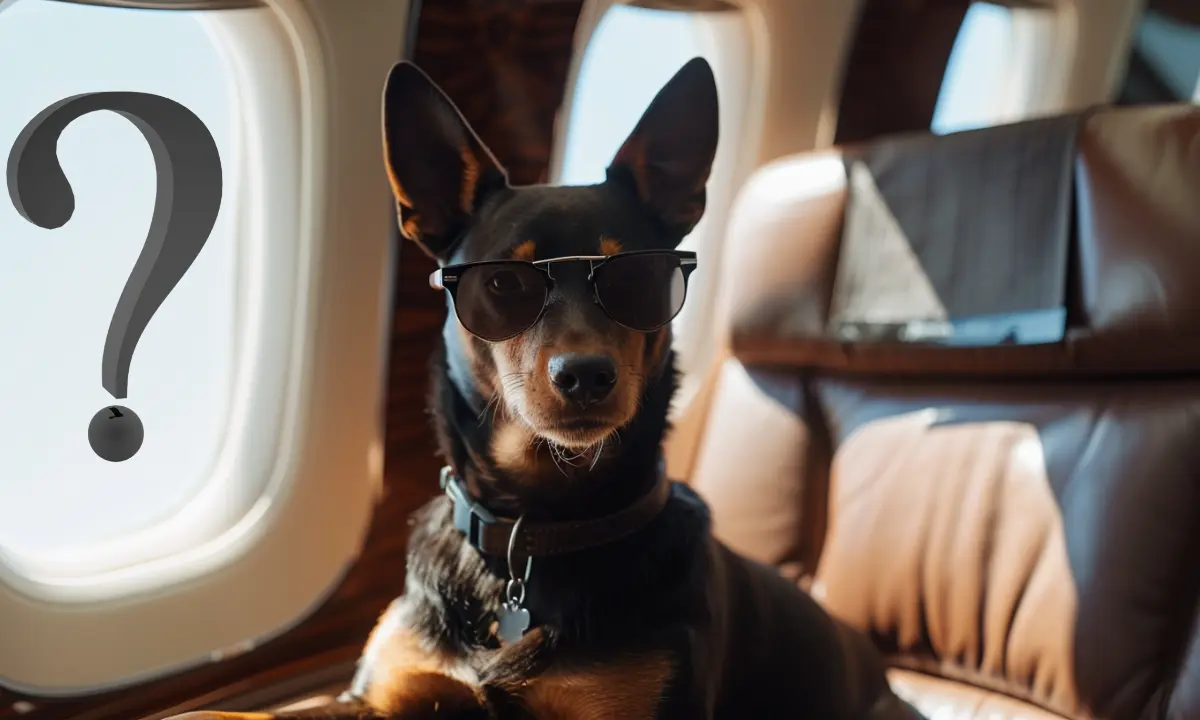
Flying with pets domestically in Australia can be a smooth process with the right preparation. Whether you’re relocating or going on a holiday, understanding the requirements and best practices for flying with your pet is essential.
This guide offers comprehensive information to help you and your pet have a safe and comfortable journey.
Ensuring the safety and comfort of pets during flights is crucial for their well-being. Pets can experience stress and anxiety just like people, and proper preparation can significantly reduce these issues.
We’re all about the right preparation here at Dogtainers. Following the necessary steps when taking pets on planes in Australia makes the experience stress-free for you and your furry friend.
Flying with Pets in the Cabin in Australia
Let’s get the big question answered straight away. Can I fly with my pet in the cabin in Australia?
The short answer is no – not yet. Service dogs are the only exception to animals being allowed in the cabin on planes.
More and more people seem to be asking this question in Australia. Because airlines in the U.S. and throughout Europe allow small dogs and cats to fly in the cabin with their owners.
So, Australia is behind the times in that regard. But the air is shifting when it comes to flying with pets in the cabin in Australia.
Recently, Virgin Australia announced its plan to allow pets to fly in the cabin with owners on domestic flights.
This Australian-first service is subject to regulatory approval. But the airline expects to launch the service within 12 months.
Only small cats and dogs will be allowed to fly in the cabin with their owners. Other restrictions will be in place, as pets:
- Will be restricted to a limited number of designated rows
- Won’t be able to roam freely or sit on the owners’ laps
- Must be in a Virgin Australia-approved pet carrier
- Must fit under the seat in front of the owner
Until the new service launches, your pets must travel in the cargo hold on domestic flights. This is generally at the rear of the plane.
Don’t worry, though. We strictly follow the protocols laid out by IATA in the Live Animals Regulations manual. These cover vital areas like crate specifications, airport and airline restrictions, and safe travelling conditions.
The cargo area is perfectly safe for your beloved pets.
- This cabin is pressurised – just like the one you fly in
- The captain sets the temperature at a comfortable 18ºC
- The area is dimly lit as well – so your pet will be comfortable
- Your pet has a separate area in the compartment, away from bags
Regulations for Domestic Pet Flights
Generally, a health check for your pet isn’t mandatory for domestic pet transport. Australia has the same biosecurity levels across states.
There are some exceptions to health checks. Pets aged 8-12 weeks or over 12 years and snub-nosed breeds like French Bulldogs must get a vet check.
Domestic pet travel to Tasmania has some regulations. Dogs must get treated for hydatids 14 days before departure – this is a simple treatment.
To enter Tasmania with your dog, you must provide one of the following:
- A veterinary certificate (from a registered vet) detailing effective treatment within 14 days of export to Tasmania
- A Statutory Declaration from the dog owner indicating effective treatment within 14 days of export
- Evidence of effective treatment, such as the worming product packet
Generally, pet health checks aren’t mandatory for domestic pet air travel. But we recommend getting a pre-travel pet health check to be on the safe side.
This is a good idea if your furry companion is older – even if they aren’t over 12 years old.
Some more exotic pets require permits. Birds and fish entering Western Australia must be checked over by the quarantine department on arrival. Rabbits cannot enter Queensland.
7 Tips for Flying Domestically with Pets
As pet owners, you want your pet’s flight to be smooth and stress-free. Here are seven tips for flying with pets, ensuring a safe and comfortable trip for everyone.
1. Visit the vet
Many pets won’t require a health check when flying domestically. As previously stated, pets aged 8-12 weeks or over 12 years and snub-nosed breeds like French Bulldogs must get a vet check.
Checking the overall health of your pet before flying is a good idea. We recommend visiting the vet, even if your pet doesn’t fall into the above categories.
2. Crate choice and crate training
Your pet must travel in an IATA-approved crate when flying domestically. The pet carrier should suit your pet’s size and breed. You want a crate with ample space for your pet to stand, turn around, and lie down comfortably during the flight.
We help customers like you choose the best crate for your pets.
So, don’t worry if you don’t know which size to get.
For those with brachycephalic breeds (brachy breeds), we recommend a larger crate. One size larger than normal will give your pet more ventilation and space to move.
Some common brachycephalic pet breeds are:
- King Charles Spaniel
- French Bulldog
- Pekingese
- Shih Tzu
- Boxer
- Pug
- Persian Cat
We advise starting crate training as early as possible to get your pet acclimatised to travel. Your pet will get familiar with the carrier, viewing it as safe and secure.
Start by introducing your pet to the travel crate gradually. Always keep the interactions with the crate calm and positive.
Allow your pet time to explore the travel carrier at their own pace. You can also put treats and toys inside for encouragement and positive associations.
3. Socialise your pet
Some pets find flying very intimidating. Shy pets can get particularly anxious when travelling.
The change in surroundings may overwhelm your pet and cause stress. But you can help them stay calmer through socialisation.
- Socialising your pet is great protection against travel stress.
- You can introduce them to unfamiliar places and circumstances to build their confidence.
- Get out and about with your dog and introduce them to new things.
- Bring them along to dog parks and other pet-friendly places so they can interact with new dogs and people.
Socialising cats for air travel can be harder, especially if your cat is older.
- Going outside with your cat inside the travel crate can help – always make sure they’re comfortable with the crate first.
- You can also try taking your cat on short car rides. This helps them get familiar with travel sounds and sensations.
4. Don’t sedate pets
We strongly advise against sedating pets before flying domestically. Pets under sedation can become:
- Dehydrated
- Disorentiated
- Travel sick easily
Authorities also find it harder to assess pets when they’re sedated. Airline personnel will reject your pet for travel if they appear sedated.
We don’t recommend sedation even for the most anxious pets.
There are other ways to help your pets relax. You could use an Adaptil Collar for Dogs or add deluxe vet bedding for your pet’s domestic trip.
Lavender oil, valerian and chamomile can have a calming effect on both dogs and cats. We recommend using them under the instructions of your vet or an experienced practitioner only.
5. Comfort items
You might consider including your pet’s favourite toy in the travel crate for comfort.
But some airlines have a strict no-toys policy.
They also won’t allow hard items inside the pet carrier. Because these could harm your pet during turbulence.
We recommend giving your pet a comfort item like a familiar blanket or an old T-shirt. But you can only include these if the airline allows it.
The item with your scent makes your pet feel safer and more secure. This can work well if your pet is very anxious.
6. Food and water before flying
Feed your pet eight hours before the flight, no sooner. Eating too close to the flight time can cause travel sickness.
Ensure your pet is well hydrated for 48 hours before they travel. Access to water is available throughout the journey – at pet boarding, during any transit stops, and in the crate while flying.
7. Travel day
Take your dog for a long walk to expend some energy – and because they love it. Let them do their business and empty the tank before they leave.
Don’t let your cat outside on the day of travel. Imagine getting ready to leave only to discover your cat has disappeared – they’re experts at that. Give your cat access to the kitty litter before the journey.
Staying calm on the day of travel is also crucial when travelling with pets. Pets are attuned to our moods and can pick up on our stress.
If you’re stressed out, this can rub off on your pet. Stay calm and positive, and keep your furry friend at ease.
Booking the Right Flight
You need to book the right flight with a pet-friendly airline when bringing your pets on planes. We can help you choose the best flight to suit your needs.
Here are some general guidelines you might want to consider.
Each airline has specific rules regarding pet travel, including size and breed restrictions, carrier requirements, and fees. For instance, Qantas allows pets on most domestic flights as checked baggage.
Virgin Australia is set to launch in-cabin pet flights for small cats and dogs on select domestic routes. So, this will change things when it comes to choosing the right flight.
But it’s important to note that in-cabin pet flights haven’t been launched yet. Your pet still needs to travel in the cargo hold at the time of writing.
Watch this space, though. Because we’ll keep you updated on any developments.
When flying with pets domestically, drop your pet off 90 to 120 minutes before the scheduled departure time. We recommend dropping off pets no earlier than 120 minutes before departure because the freight team won’t accept pets before 2 hours.
Most airlines also won’t hold your pet for more than 90 minutes after arrival at the destination. Planning your flight just right is critical so you can pick up and drop off your pet easily.
Don’t worry if not everything lines up for dropping off and collecting your pet for their flight. We can take care of that with our door-to-door service.
Using a pet transport company like Dogtainers sets you up for a stress-free journey.
Conclusion
Flying with pets domestically requires careful planning and preparation to ensure a smooth and stress-free experience. We recommend securing flights as early as possible to popular domestic destinations:
Space for pets is limited on planes. So, the spots might get snapped up quickly.
We can generally secure flights three months in advance. But we’re limited to 14 days before departure with Qantas.
With the right planning, bringing pets on planes in Australia can be stress-free.
That’s especially true if you use Dogtainers. We’ve been providing stress-free pet transport for 50+ years.
Get your quote today for domestic pet transport.



Share this article