

Taking your pet from Australia to the Philippines is a precise process. It involves getting your paperwork and health records in order before you travel.
The process focuses on documenting your pet’s identity, vaccination history, and ownership details so everything is ready ahead of time.
Preparing the correct documents in advance is essential. Missing or incomplete paperwork can slow the process down and ultimately lead to the refusal of entry for your pet.
That’s why we recommend using a pet transport company like Dogtainers. We can make taking your pet from Australia to the Philippines a smooth and stress-free journey.
Here, we cover what you need to prepare, from microchipping to vaccinations.
Prepare a Notarised Affidavit of Undertaking for Import
A Notarised Affidavit of Undertaking for Import is a required document when taking a dog or cat from Australia to the Philippines. This affidavit records your pet’s key details and confirms the identity of the owner or exporter.
Required Information in the Affidavit
The affidavit must clearly include the following information:
- Species of the pet
- Breed
- Sex
- Colour
- Age
- Name of the owner or exporter from Australia
- Address of the exporter
All details should be accurate and consistent with the information shown on your other documents.
Notarisation Requirement
The affidavit must be notarised before submission. A non-notarised affidavit won’t meet the requirement and may delay the import process.
Provide Proof of Microchip Identification
You must provide proof of the microchip number for your dog or cat as part of the import requirements.
The microchip information clearly identifies your pet. Any paperwork you complete must precisely reference your pet’s corresponding microchip number, as any mistakes can result in delays or refusal of entry.
Accurate microchip records help confirm your pet’s identity and support all importation paperwork.
Prepare Vaccination and Deworming Records
Vaccination and deworming records are a key part of your pet’s import documentation. These records must clearly show that rabies vaccination requirements have been met and include all mandatory details.
Rabies Vaccination Requirements
Dogs and cats must be vaccinated against rabies at a minimum age of 12 weeks.
If your pet was vaccinated before 12 weeks of age, a booster shot must be given with your consent before applying for import clearance.
The most recent rabies vaccination must be administered at least 14 days before travel.
Mandatory Details on the Vaccination Record
The vaccination record or certificate must include all of the following information:
- Name and address of the owner
- Breed, sex, and date of birth, or approximate age if the date of birth is unknown
- Colour, markings, and other identifying information
- Date of vaccination and vaccine product information
- Vaccine expiry date
- Name, licence number, and signature of the veterinarian who administered the vaccine
Include a Photograph of Your Pet
You must include a clear photograph of your dog or cat as part of the import documentation.
The photo should clearly show your pet and be suitable for identification purposes, helping authorities match the animal to the details listed on your other records.
Taking Your Pet from Australia to the Philippines with Dogtainers
Taking your pet from Australia to the Philippines takes attention and preparation, but it doesn’t have to be stressful. With Dogtainers, our experts help you every step of the way to ensure each stage of the process is completed correctly.
We guide you through every step, from advising you on vaccinations to arranging vet inspections. You don’t have to complete the process alone.
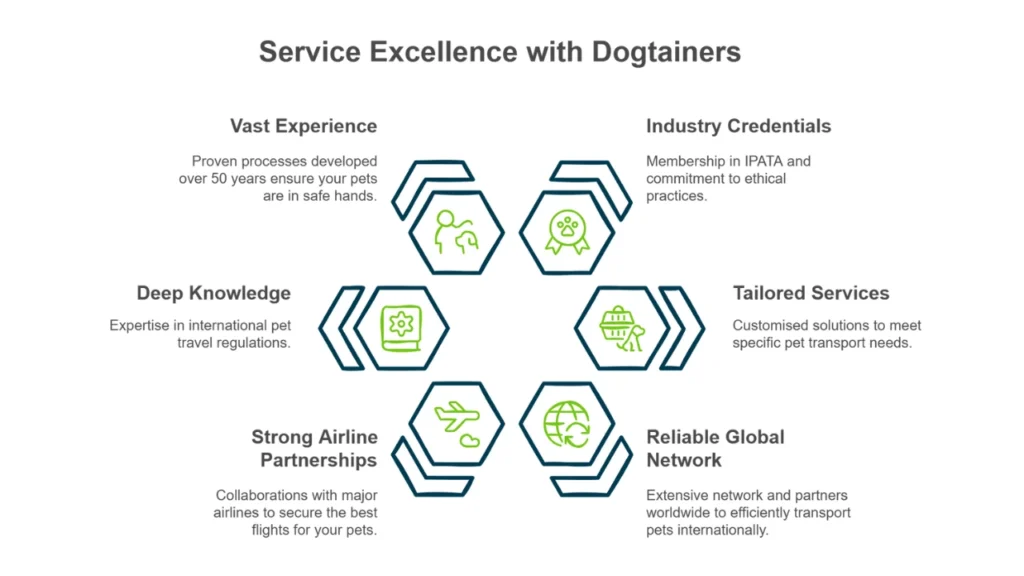
Our experts have been helping pet owners like you with international pet transport for over 50 years. We’re Australia’s oldest and most reliable pet transport company with:
- Vast experience
- Industry credentials
- Tailored services
- Reliable global networks
- Strong airline partnerships
- Deep regulatory knowledge
Conclusion
Taking your pet from Australia to the Philippines comes down to preparing the right documents and getting the details right before you travel. Each requirement plays a role in confirming your pet’s identity, vaccination status, and ownership.
Starting early gives you time to organise paperwork, check vaccination timing, and make sure all records are complete and consistent. It’s much easier to fix issues before submission than to deal with delays later.
Carefully following each step and double-checking every document ensures a smoother and more efficient process. You can avoid unnecessary complications when bringing your dog or cat to the Philippines.
Using a pet transport company like Dogtainers ensures all aspects of the process are handled correctly. We are with you every step of the way, making pet transport from Australia to the Philippines a smooth and stress-free process.
Get your quote today for taking your pet from Australia to the Philippines.
Pet Travel from Australia to the Philippines FAQ
What documents are required to take a pet from Australia to the Philippines?
You’ll need a notarised Affidavit of Undertaking for Import, proof of your pet’s microchip number, vaccination and deworming records, a photograph of your pet, and vet checks.
When must my pet be vaccinated against rabies?
Dogs and cats must be vaccinated against rabies at 12 weeks of age or older. If vaccination occurred earlier, a booster is required before applying for import clearance. The most recent rabies vaccination must be administered at least 14 days prior to travel.
What information must appear on the rabies vaccination certificate?
The certificate must include the owner’s name and address, the pet’s breed, sex, age or date of birth, colour, and identifying markings, vaccination date and vaccine details, vaccine expiry date, and the veterinarian’s name, licence number, and signature.
Why is microchip proof required?
Proof of the microchip number is used to clearly identify your pet and link it to the vaccination records and affidavit. The microchip details must match the information filled out on all other documents.
Why is it important to check documents before submission?
Incomplete or inconsistent documents can cause delays or issues before travel. Double-checking details like vaccination dates and identification information helps ensure the paperwork meets all requirements before submission.



Share this article